
San Jacinto County Release Paths
A San Jacinto County release record describes the end of one agency's physical custody. It does not always mean freedom from all custody. The Sheriff's Office may book someone out to the community after bond, time served, a dismissal, or a court order. It may instead transfer the person to TDCJ, another county, ICE, the U.S. Marshals Service, or another authorized custodian. The destination field is therefore as important as the release time. The official sheriff page provides the jail contact and a link to IVSS-Counties, but it does not publish a current roster or released-person archive.
Records also use related terms in different ways. A discharge usually means a sentence or supervision term ended. Parole permits a state prisoner to serve part of a sentence under supervision. Probation, called community supervision in many Texas records, generally follows a court order instead of release on parole. Time served means the court credited enough custody toward the sentence. A transfer ends custody at one facility while custody continues elsewhere.
- Book-out
- The jail's recorded end of a booking episode.
- Discharge
- The recorded end of a sentence or supervision obligation.
- Detainer
- A request or notice that another authority may take custody.
- Mandatory supervision
- A Texas state-release status governed by statute and Board review rules.
San Jacinto County Release Types
The legal reason and physical destination should be read together. A bond can end pretrial jail confinement while the charge remains open. A sentence completion ends the confinement ordered in that case, but another warrant may still control. The San Jacinto County Jail record is the best source for the actual exit event; the court file explains the order behind it.
| Release or exit | Meaning | Next record |
|---|---|---|
| Surety, cash, or personal bond | Pretrial confinement ends while the case continues | Jail book-out and bond order |
| Time served or sentence complete | The local sentence calculation permits release | Judgment, jail credit, and release sheet |
| Dismissal or court order | A judge or prosecutor's action supports release | Signed order plus completed jail event |
| TDCJ transfer | County custody ends and state custody begins | TDCJ IVSS offender detail |
| Other agency pickup | Another county, federal, or immigration custodian takes control | Destination agency locator or record |
Which San Jacinto Bond Ended Custody?
The San Jacinto County Court gives different follow-up instructions for a bail-bond-company release, a personal-recognizance bond, and a cash bond. Each route can end pretrial confinement. None, by itself, means that the charge was dismissed or that the person was acquitted. A surety bond involves a bonding company; a personal bond relies on the person's promise and court-set terms; a cash bond uses funds deposited under the court's process.
Ask the jail for the bond type, book-out time, booking number, and cause number. Then use the cause number with the correct clerk. That two-record check shows both the physical release and the continuing court case. If the jail lists a transfer or hold instead, the bond did not establish community release from every authority.
San Jacinto Release Record Fields
A complete request identifies the person and asks for the fields needed to distinguish release, transfer, and continuing custody. San Jacinto County has not posted a standard public release form or an online field list, so these are requested items rather than a promise that each appears on one sheet.
| Field | What it establishes |
|---|---|
| Name, date of birth, SID, booking number | Identity and the correct booking episode |
| Book-in date and time | Start of the local custody event |
| Book-out or release date and time | When the sheriff recorded the end of that event |
| Release authority or reason | Bond, order, sentence, agency pickup, or other basis |
| Charges and cause numbers | Links the jail record to the court file |
| Bond type and amount, if maintained | Clarifies the pretrial release route |
| Destination or receiving agency | Separates community release from transfer |
A signed court order proves the legal event it records. It does not always show the minute release processing ended, and it cannot rule out a second hold. Pair it with the sheriff's custody log or booking/release sheet.
Request San Jacinto Release Records
The Texas Public Information Act, Government Code Chapter 552, governs requests for existing public records subject to its exceptions. The sheriff has not posted a dedicated release-record request email, local fee, or records-desk hours. Call first to confirm the current delivery method and custodian.
- Identify the person by full name and date of birth or another known identifier.
- Give an approximate booking range and request the booking/release sheet and custody log.
- Name the exact fields needed, including book-out time, reason, cause number, and destination.
- Ask whether a cost estimate or clarification is required. Texas cost rules may apply, but no local universal fee is published.
- Compare the response with the court order and any receiving-agency record.
75 W. Cedar Avenue
Coldspring, TX 77331
936-653-4367
Fax: 936-653-5058
Do not demand that the office create a report it does not keep. Ask for an existing log, sheet, or electronic record. No public-facing retention period was found. A clerk file may remain useful when a roster entry or notification result is gone.
Texas Release Records After Court Relief
Public access can change after expunction or an order of nondisclosure. Texas expunction law appears in Code of Criminal Procedure Chapter 55A. Nondisclosure is governed by Government Code Chapter 411, Subchapter E-1. Eligibility depends on the case facts and the statute. The Texas Office of Court Administration forms explain the nondisclosure process and limits.
Nondisclosure restricts public access to qualifying criminal history but does not mean every record was destroyed. Expunction has different effects and eligibility rules. A missing portal result after a lawful order is not affirmative proof of the old custody event. The court order and agency response control.
Why San Jacinto Records May Point Elsewhere
San Jacinto County has two very different jail stories. The Old San Jacinto County Jail was completed in 1887 and served until 1980. It is now a historic landmark, not a modern custody office. Archival references may name it, but current release questions belong with the sheriff and clerks.
The modern detention center suffered Hurricane Beryl damage in July 2024. Reporting on the closure and out-of-county custody described prisoners being held elsewhere while detention at the damaged center was prohibited and repairs were addressed. During the affected interval, a local booking and court case could coexist with physical custody outside the county. Request transport and destination records. Disappearance from a local source did not prove release.
The current operating status and the custodian for a date-specific case should be confirmed with the sheriff. No official source established local release hours, property-return steps, exit door, waiting point, or transportation practice.
Find Released San Jacinto Inmates
No one portal covers every release. Start with the known booking agency, then follow the destination. IVSS-Counties is useful for a current custody lead, but it warns that someone no longer in custody may not appear. A no-result is not a release record.
- Open IVSS-Counties from the sheriff's official page and search the name or known identifier.
- Call the jail and ask whether the person was released, transferred, or remains housed through another facility.
- Request the book-out event if confirmation matters.
- Use TDCJ IVSS when the destination is state custody, BOP for a sentenced federal person, or ICE ODLS when an immigration transfer is documented.
- Match the booking or cause number to the proper San Jacinto County court file.
Record the exact wording and time of each result. “Transferred,” “released,” “not in custody,” and “discharged” answer different questions. A county transfer supplies the next custodian, not a community release. A TDCJ parole status shows that prison confinement ended while supervision continues. A BOP release result addresses only BOP custody. If the systems conflict, give more weight to the dated record created by the agency that physically held the person, then ask that agency to explain the destination.
Name-only matches require care. Compare the date of birth, SID, jail ID, permanent booking number, TDCJ number, or BOP register number that the correct system supplies. Save the cause number because it opens the durable local court path after a temporary custody result disappears. Avoid treating an absent search result as a fact. Misspellings, identifier changes, restricted data, delayed feeds, a transfer, or removal after release can each produce the same blank screen.
The separate San Jacinto County 24-Hour Releases route explains how to request a same-day log when no public feed exists. A named-person search still requires person-level corroboration.
TDCJ Search for San Jacinto Releases
A transfer to the Texas Department of Criminal Justice is not a community release. Search TDCJ IVSS by name, SID, or current TDCJ number; a separate route supports previous TDCJ numbers. Open the detail only after comparing identifiers. The display can distinguish Offender Status, Facility, Expected Release Date, recorded Release Date, and parole-review information.
| Search item | Use |
|---|---|
| Name | Broad match; compare identity fields |
| SID | Texas state identifier |
| Current TDCJ number | Direct state-record search |
| Previous TDCJ number | Separate history search when the current number is unknown |
| Expected or projected date | Prospective estimate, not proof release occurred |
| Release date and status | Retrospective state event and possible supervision state |
The TDCJ custody and parole interface shows the state-system distinction. Its details should be read literally: parole or mandatory supervision means incarceration ended while state supervision continues.
The pictured TDCJ search fields and released-status example show why an identifier is safer than a name alone.
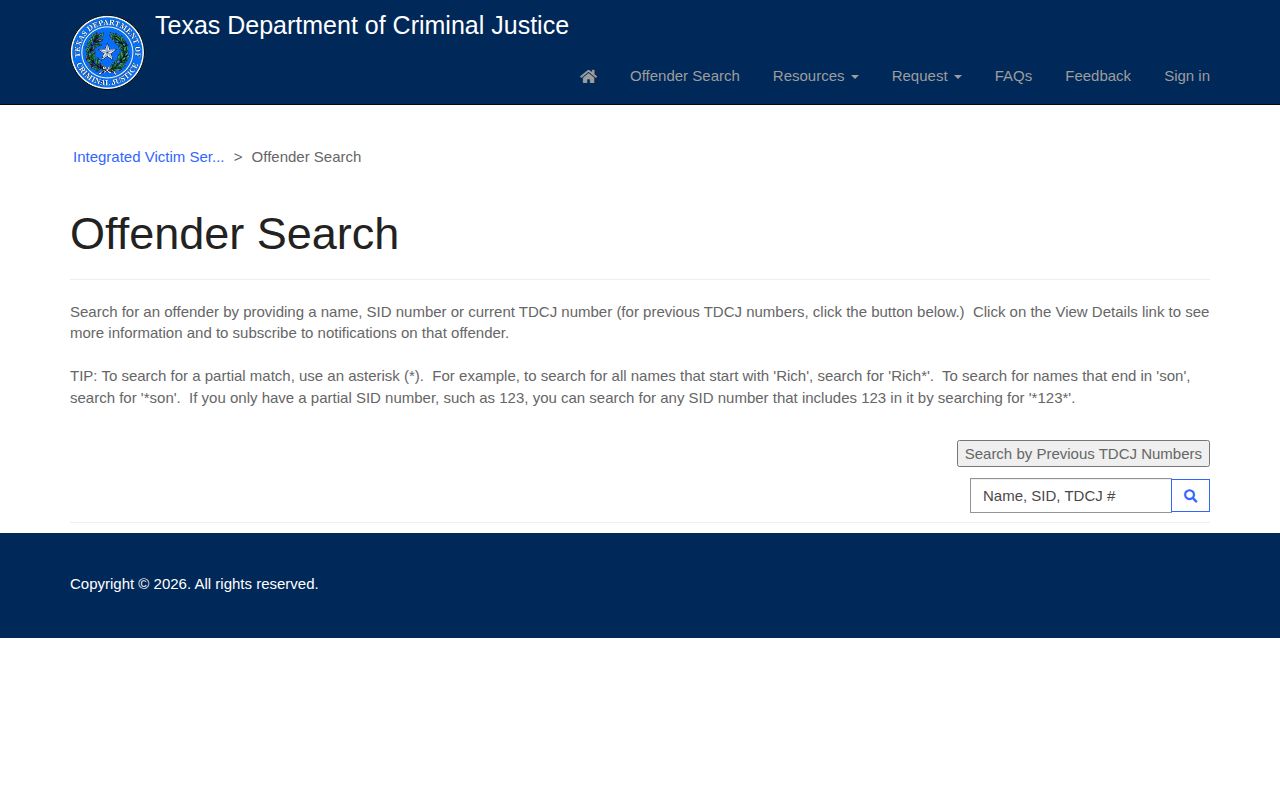
The interface separates search inputs from the later status and date fields used to verify a state release.
Match San Jacinto Releases to Court Records
Local court jurisdiction is split. Class A and B misdemeanors go through County Court, Class C matters through justice court, and felonies through the 258th or 411th District Courts. The LGS Online Records Search and public terminals support self-search, but the County Clerk's notice says staff do not conduct broad research and asks for an existing cause number. That makes a booking sheet, bond paper, or IVSS identifier especially valuable.
For a court file, look for the charge, bond order, judgment, dismissal, sentence, jail credit, probation order, revocation, and discharge. The District Clerk posts that copy requests are not accepted by email. A court disposition explains the case result, while the sheriff event fixes the physical release or transfer time.
The County Clerk's posted public-computer hours are Monday through Thursday from 8 a.m. to 5 p.m. and Friday from 8 a.m. to 4 p.m., with the computers shut down 15 minutes before closing. District Clerk hours differ: Monday through Thursday has morning and afternoon blocks, and Friday service ends at noon. Confirm hours before travel. Ask the clerk which office owns the cause rather than sending the same request everywhere.
The captured San Jacinto County case-search interface illustrates the durable court path after a jail entry disappears.
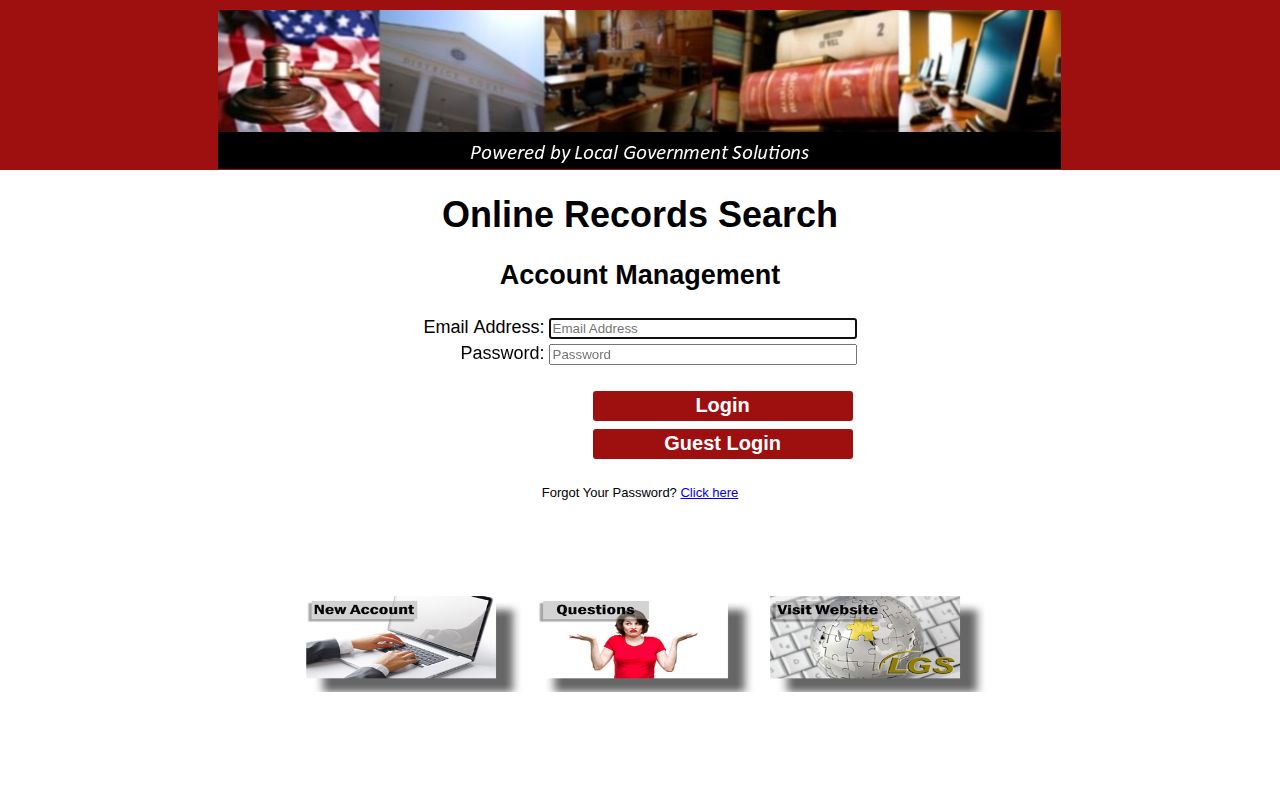
Cause numbers bridge the jail record and the correct misdemeanor or felony file.
San Jacinto State Release Count
TDCJ's FY2024 Statistical Report counts 43 state releases tied to San Jacinto County of conviction: 38 prison releases, five state-jail releases, and zero SAFP releases. This is a narrow state statistic. It does not count San Jacinto County Jail bond-outs, and it does not say the release physically occurred in the county.
Do not use the annual figure as a recent-release list. It measures a different system, geography, and period.
San Jacinto Release Alerts and Supervision
Texas now uses separate notification layers. The sheriff links IVSS-Counties for participating county events. TDCJ IVSS covers prison, parole, and mandatory supervision. Legacy VINE or VINELink wording remains familiar, but a county alert is not the official release sheet. Save the notice, read whether the event is release or transfer, and confirm it with the custodian.
Parole is verified in the TDCJ record and through the Parole Division. San Jacinto County maps to the Conroe District Parole Office. Local probation is handled by the San Jacinto County CSCD, whose reporting and payment tools are participant accounts rather than a public roster. The San Jacinto County post-release supervision page separates those two offices and explains the status check.
Federal and ICE San Jacinto Releases
There is no verified BOP or ICE detention site in San Jacinto County. These are receiving-custodian paths used only when a transfer record, detainer, or case points there. The BOP inmate locator covers sentenced federal custody. “Released” or “Not in BOP Custody” means BOP no longer holds the person; another authority or federal supervision may still apply.
Federal pretrial detention is ordinarily managed by the U.S. Marshals Service, which has no public person locator. PACER may show a federal detention or release order. The ICE detainee locator accepts a nine-digit A-number and country of birth, or exact biographical search fields. ICE guidance says some recently released records may remain within its limited coverage, but delay and exclusions make a no-result inconclusive.
| Last known system | Released-person evidence | Key limit |
|---|---|---|
| County jail | Sheriff book-out or custody log | IVSS may drop former detainees |
| TDCJ | Release date and offender or supervision status | Expected date is not an actual release |
| BOP | Released or Not in BOP Custody result | Does not exclude other custody |
| ICE | ODLS result or ERO confirmation | Coverage, delay, and retention limits |
Texas Release Money Is Not a County Fee
TDCJ guidance describes release gratuity by state release type. Parole and mandatory-supervision cases may receive two $50 payments; a flat prison discharge may receive $100; state-jail inmates do not receive release money under the cited state rule. These are TDCJ practices, not San Jacinto County Jail fees, property policies, or benefits.
No official local source states a booking fee, pay-to-stay charge, property-return method, or cash-release practice for the San Jacinto County Jail. Call the jail before travel or pickup. Do not import another Texas county's policy.
San Jacinto Release Record Custodians
Choose the page that matches the actual custodian. The county jail handles modern local booking exits. The old jail is historical only. TDCJ, BOP, and ICE pages explain state, federal, and immigration records without treating those systems as local buildings.
- San Jacinto County Jail: local booking, release, and transfer records.
- Old San Jacinto County Jail: archival context, not present custody.
- Texas Department of Criminal Justice statewide system: prison, state-jail, parole, and mandatory-supervision records.
- Federal Bureau of Prisons: sentenced federal custody and release status.
- ICE detention network: immigration custody and limited recent-release lookup.
Public Record Search
Sponsored Results